

 Home care A practical guide
For individuals, families and caregivers
Home care equipment in Cyprus
A room-by-room guide.
Start with the person and the task. Check the space, then compare equipment. A chair that fits the room may still be unsuitable for its user.
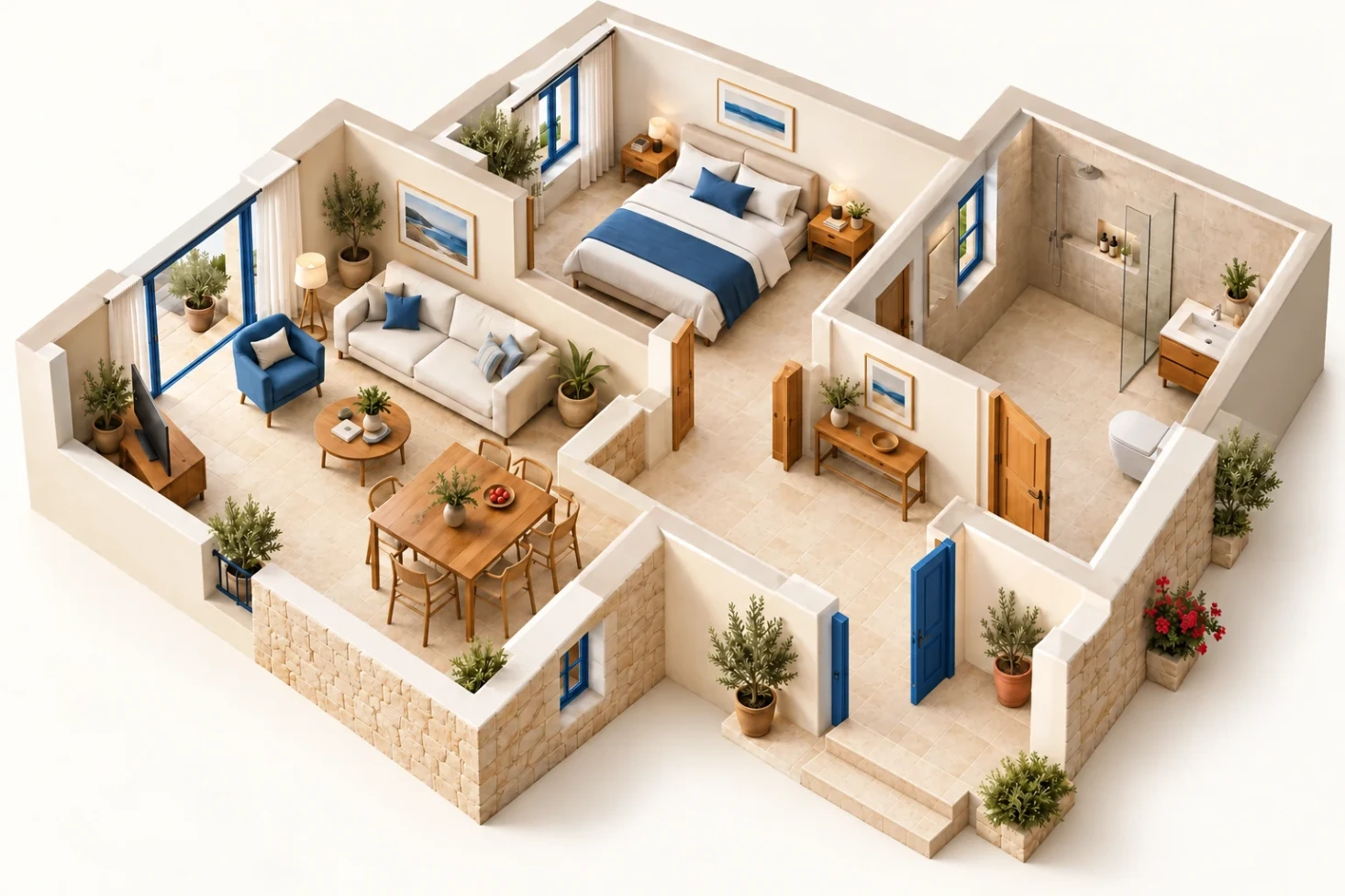
A clearer starting point
Name the task.
Then consider the product.
“We need a bathroom chair” is a starting idea. “Standing throughout a shower has become difficult” describes the problem more clearly and leaves room to consider the right support.
Ask the person what matters to them. Discuss difficult tasks with the healthcare professional involved in their care; an occupational therapist can consider the person alongside their home environment. NHS guidance on home adaptations explains this approach.
This guide helps you prepare questions before buying. It does not assess an individual’s home or prescribe equipment.
- The person
What can they manage, and what support do they need?
- The task
Which activity has become difficult?
- The space
Where must the activity and equipment fit?
- The equipment
Which exact option matches the assessed need?
01Entrance, steps & routes
One doorway is only
part of the journey.
Think entrance steps, thresholds, turns and everyday destinations—and the exact equipment that must move between them.
Consider the route from the entrance to the places used every day: a favourite chair, the toilet and the bed. Record narrow door openings, turns, entrance steps, thresholds and any lift involved. An item that passes through one doorway may still be difficult to turn in a corridor.
For a wheelchair, distinguish the seating area from the full width of the chair. Ask for the exact overall dimensions of the intended configuration and discuss how it can be checked in the space. There is no single doorway measurement in this guide that proves a good fit.
Keep routes clear of loose objects and trailing cables. The CDC’s home fall-prevention guidance also draws attention to rugs and furniture that obstruct walking routes.
Choosing a wheelchair also involves the person’s needs, fitting, training and follow-up. These are central to the WHO wheelchair provision guidelines.
Read our wheelchair selection guideAn example from our range
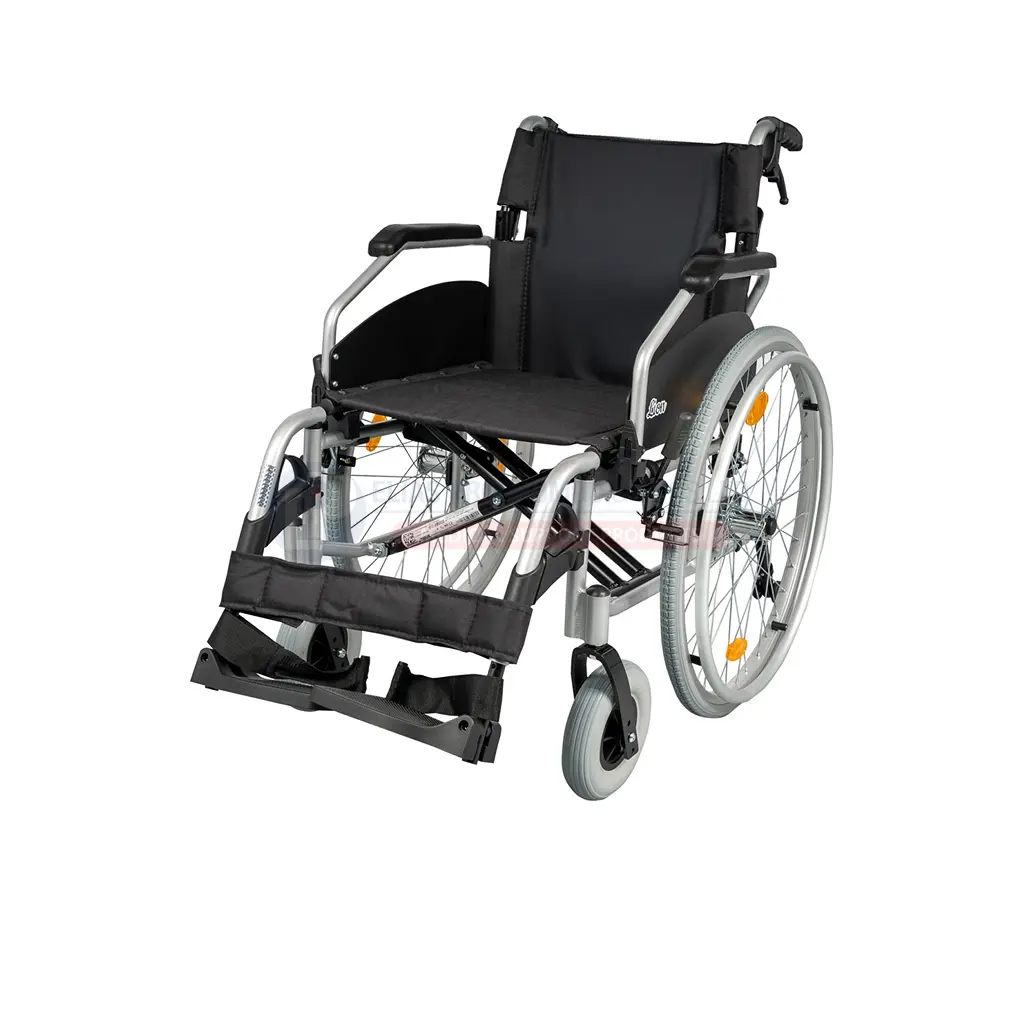
Lion aluminium wheelchair
The folding aluminium frame, quick-release rear wheels and detachable, adjustable footrests are features to compare when discussing handling and storage needs. Confirm the exact configuration, dimensions and suitability for the person before ordering.
View the Lion wheelchairSteps need a plan, too.
Steps and raised door thresholds can interrupt an otherwise usable route. A suitable ramp can bridge a level change, but its fit depends on the entrance, the mobility device and the support the person needs.
A quick overview of common ramp formats.
- Threshold ramps
- For a small change of level at a doorway. Check the height on both sides of the threshold.
- Portable folding ramps
- A removable, full-width surface that folds for transport or storage. The selected length must suit the rise.
- Telescopic channel ramps
- A pair of extendable wheel tracks. Check wheel layout and ground clearance; device compatibility matters.
- Fixed or modular ramps
- Options for a planned, longer-term route, sometimes with platforms and changes of direction.
Before choosing: record the total rise, available ramp and turning space, door width and swing, and ground conditions. Confirm the permitted gradient, usable width and load rating against the exact ramp and mobility-device instructions. Several steps or limited space may need a different access solution. See the ramp-assessment guidance.
Prodromou Medical offers access ramps. Ask our team which types and configurations we currently supply, and what needs checking for your entrance.
View a folding ramp option02Living & seating
A seat is part
of an activity.
Describe the whole movement, including any help the person usually needs.
- Approach
- Sit
- Reach
- Stand
Describe the full activity: approaching a seat, sitting down, reaching everyday items and getting up again. Note whether another person normally helps. A clear description is more useful than choosing a seat only because it looks comfortable.
If sitting, standing or moving between seats has become difficult, ask the relevant healthcare professional to assess the task before choosing assistance equipment. The NHS equipment guide groups options by the activities people find difficult; it is not a prescription for a particular product.
Tell the care professional if a task is manageable in the morning but becomes difficult later. Include the person’s usual routine in the discussion.
If pressure-care equipment has been recommended, bring the exact recommendation when comparing options. Our Repose evidence guide explains the range and the limits of the research.
03Bathroom & toilet
Two questions.
Does it suit the person?
Does it fit the space?
Keep the person’s support needs and the product’s full footprint in the same conversation.
Separate the activities: entering the bathroom, getting into the shower, washing and using the toilet. Different tasks may need different solutions; a shower chair does not resolve every part of that journey.
Note the usable floor space, the shower opening and the position of fixed fittings. Ask about the chair’s full footprint as well as its seat size. Space occupied by the legs matters when comparing it with a shower tray or enclosure.
The area the person sits on.
The floor space taken up by the chair, including its legs.
Read the suitability limits. The instructions for the backrest chair shown here require independent balance during sitting and standing, and the ability to remain seated. They say it must not be used by people with balance or perception disorders. A backrest does not remove these restrictions.
For toilet equipment, describe the difficulty first: reaching the toilet, sitting down or standing up. Ask a qualified professional which type of support is appropriate before comparing the bath and toilet equipment range.
Read our shower-chair fit guideAn example to discuss
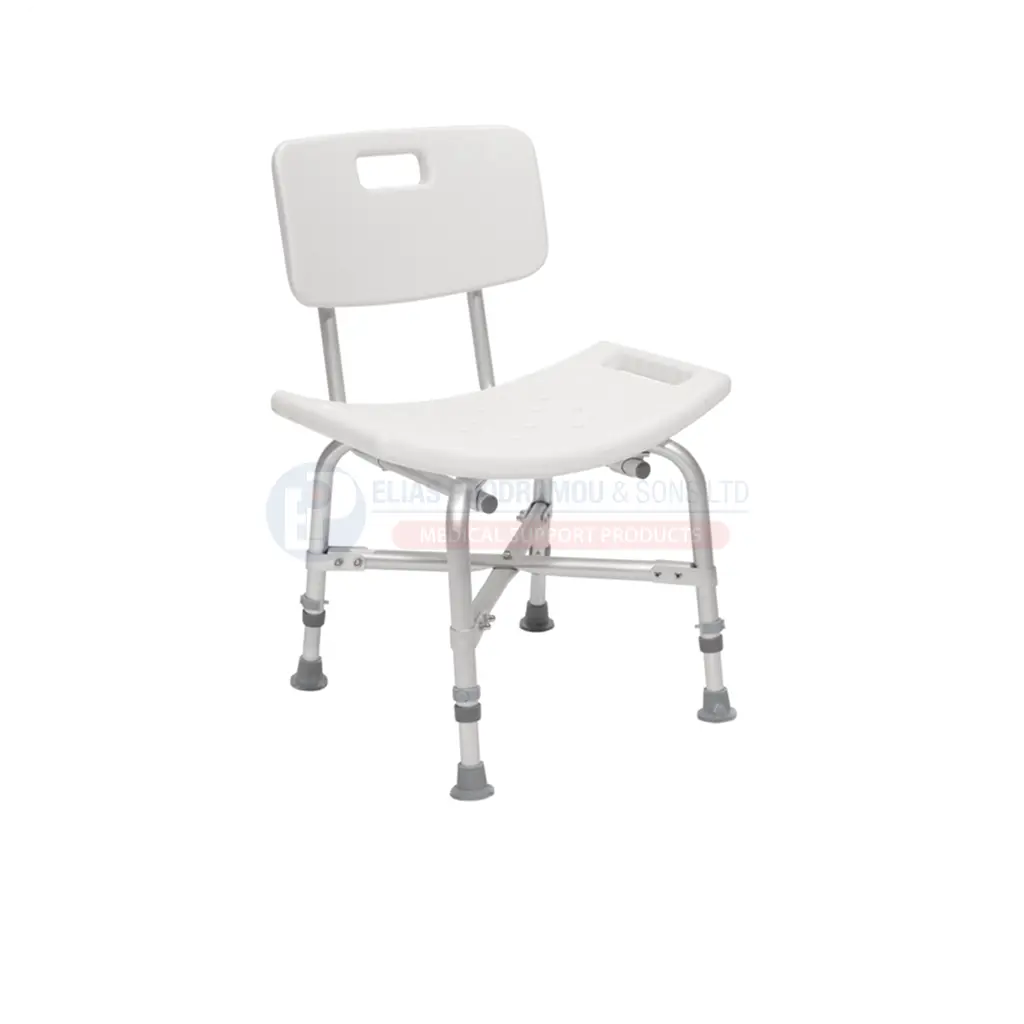
Shower chair with backrest
This model has a backrest and adjustable height. Those features do not establish that it is appropriate for someone with poor balance.
View this shower chair04Bedroom & night
Think about the journey
after the lights go down.
Getting into bed, changing position and reaching the bathroom deserve separate attention.
Consider lighting and the route used at night. Keep a suitable light within easy reach and address a dark route to the bathroom; these are among the practical points in the CDC home-safety guidance.
Make a note of the current bed and mattress if equipment may be added. If getting into bed, changing position or getting out has become difficult, discuss that activity with the care professional rather than selecting an accessory from appearance alone.
Browse our home care range once the type of support is clear, then check the exact product’s instructions, dimensions and compatibility.
The evidence, in context
What does home-hazard
research actually show?
lower rate of falls
In older people selected
as being at higher risk.
Home fall-hazard reduction programmes.
High-certainty evidence for this subgroup.
What was studied
A 2023 Cochrane review found that programmes addressing hazards in the home reduced the rate of falls by about 38% among older people selected as being at higher risk of falling. The evidence for this subgroup was rated high certainty.
What the number means
The rate ratio was 0.62, with a 95% confidence interval of 0.56–0.70. A fall rate counts falls over time; it is not the same as the proportion of people who fall.
Where the evidence stops
The review did not find the same benefit when people were not selected for fall risk. It also found insufficient evidence to establish the effect of education alone. Read the Cochrane review.
What this means for buying: these findings concern home-hazard reduction programmes, not proof that reading this article or buying a particular chair prevents falls. The review searched evidence through January 2021.
Common questions before buying
Can I buy the same equipment that helped a relative?
It may be a useful example to discuss, but the person’s abilities, assistance needs and home layout may differ. Match the exact equipment to the current need instead of assuming the same model will suit everyone.
Which measurements should I bring?
Start with the space relevant to the activity: door openings and turns for mobility equipment, usable floor area for a shower chair, or bed and mattress details for bed accessories. Ask which additional measurements are needed for the exact model. A number alone does not establish clinical suitability.
Is this a professional home assessment?
No. It is a planning guide for product research and better conversations. An individual assessment considers the person, their activities and environment. Ask the healthcare professional involved in care about the appropriate local route.
Sources & further reading
- NHS: Home adaptations. Reviewed 12 December 2025. Person-and-environment assessment; UK service context.
- NHS: Household gadgets and equipment to make life easier. Reviewed 19 September 2024. Options organized by daily activity.
- CDC STEADI: Check for Safety. 2017. Household hazards, clear routes and lighting.
- WHO: Wheelchair provision guidelines. 5 June 2023. Individual assessment, fitting, training and follow-up.
- Shower-chair instructions for use. August 2024, English section, page 2. Exact-model suitability restrictions.
- MHRA: Bed rails—management and safe use. Updated 30 August 2023. Individual assessment and equipment compatibility.
- Cochrane: Reducing fall hazards within the environment. 10 March 2023; searches to January 2021. Higher-risk subgroup result and limitations.
- NICE NG249: Falls—recommendations. 29 April 2025; recommendations 1.3.5–1.3.6. UK clinical guidance.
- Enable Access: Ramp and access formats. Manufacturer overview of portable, threshold, external and modular options. Not a list of Prodromou Medical stock.
- Enable Access: Wheelchair ramp assessing, part 1. 2 May 2017; accessed 20 October 2026. Site dimensions and conditions, not Cyprus building requirements.
- Enable Access: Channel ramps. Manufacturer information on telescopic formats and device compatibility. Exact model instructions take priority.
- Lion aluminium wheelchair: manufacturer instructions. April 2023, Annex A. Shared features of the listed aluminium wheelchair variants; exact dimensions vary by configuration.
Prepared by Prodromou Medical. Product information and source material checked on 20 October 2026. This guide supports informed enquiries and does not replace an individual assessment or the instructions supplied with equipment.