

A shower chair should fit both the person and the bathroom. Before choosing, check the support needed, the seat and height settings, the maximum user weight, and the space required by the complete chair.
This guide explains what to check before buying, compares two options from our shower-seating range, and separates practical product features from the clinical evidence on reducing falls at home.
Consider sitting, standing and any assistance needed.
Compare supports, seat size and the weight limit.
Allow for the complete chair and access around it.
1. Start with the person, before the product
Think through the whole journey: reaching the bathroom, crossing the shower threshold, sitting down, washing and standing up again. A seat inside the shower does not resolve difficulty getting into it.
If the person has difficulty balancing, has fallen, or needs help to sit down or stand up, seek advice from an occupational therapist or another appropriately qualified healthcare professional before choosing equipment. An assessment can consider the person and the bathroom together. NICE’s falls guidance supports individual assessment and targeted home-hazard interventions for older adults and other adults within its risk-based scope. Source: NICE NG249, assessment and home-hazard recommendations.
2. Check both body fit and bathroom fit
Seat dimensions and floor dimensions describe different things. A seat may look narrow while its legs spread beyond it. Compare the complete chair with the usable floor area where it will stand, including the space needed to approach it.
Two measurements. Two different jobs.
Seat dimensionsHelp you assess the space available for the person.
Overall footprintShows the floor space needed by the complete chair.
| Check | What you need to establish |
|---|---|
| The person | Whether the intended user meets the model’s instructions for sitting, standing and balance. Identify any assistance needed. |
| Seat and support | The usable seat width and depth, space between armrests if fitted, and whether the person needs a backrest or different support. |
| Seat height | The available adjustment range and a suitable setting for the person. Ask a clinician if positioning or standing up is difficult. |
| Maximum user weight | The limit for the exact model. Stay within it; a higher capacity does not establish seat fit or transfer suitability. |
| Floor footprint | The outside width and depth at the chosen setting. Check that all feet can stand securely, without resting on an edge or obstruction. |
| Access around it | The door opening, door swing, threshold, shower screen and room for any assistance. |
Measure the usable space inside the tray, rather than relying on the tray’s advertised size. Curved corners, raised edges and a door that opens inward can change the space available.
Before ordering, ask us to confirm the exact model’s dimensions and adjustment range against your measurements. If wheelchair access is also part of the route, our guide to choosing a wheelchair for your home explains the wider access questions.
3. Compare two shower-seating options
These examples show different combinations of support and features in the Prodromou Medical range. Use them to build a shortlist after considering the person’s needs; the specifications are not a clinical recommendation.
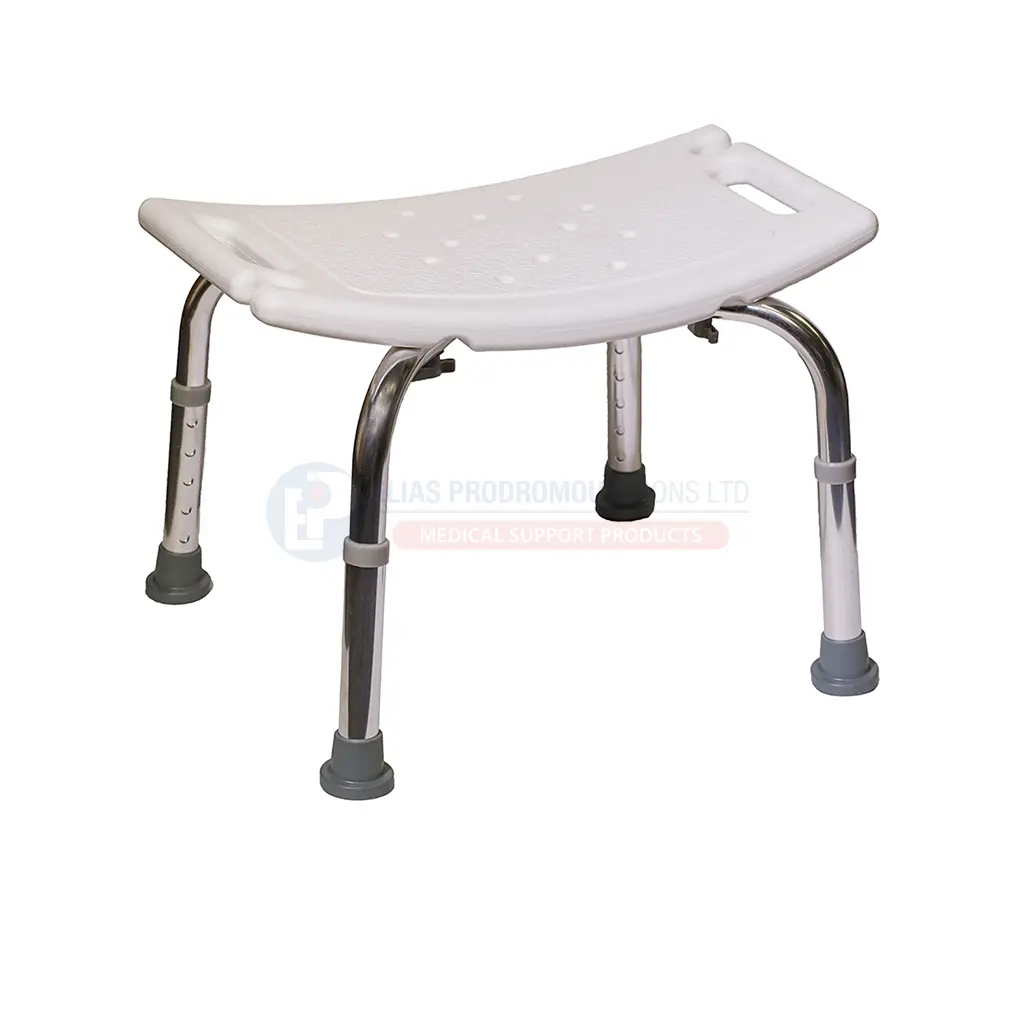
BACKLESS SEATING
Adjustable shower stool
Maximum user weight: 100 kg
A height-adjustable aluminium stool without a backrest or armrests. Consider the absence of those supports when discussing what the person needs.
Its instructions require independent balance for sitting and standing, as well as the ability to remain seated.
View the shower stool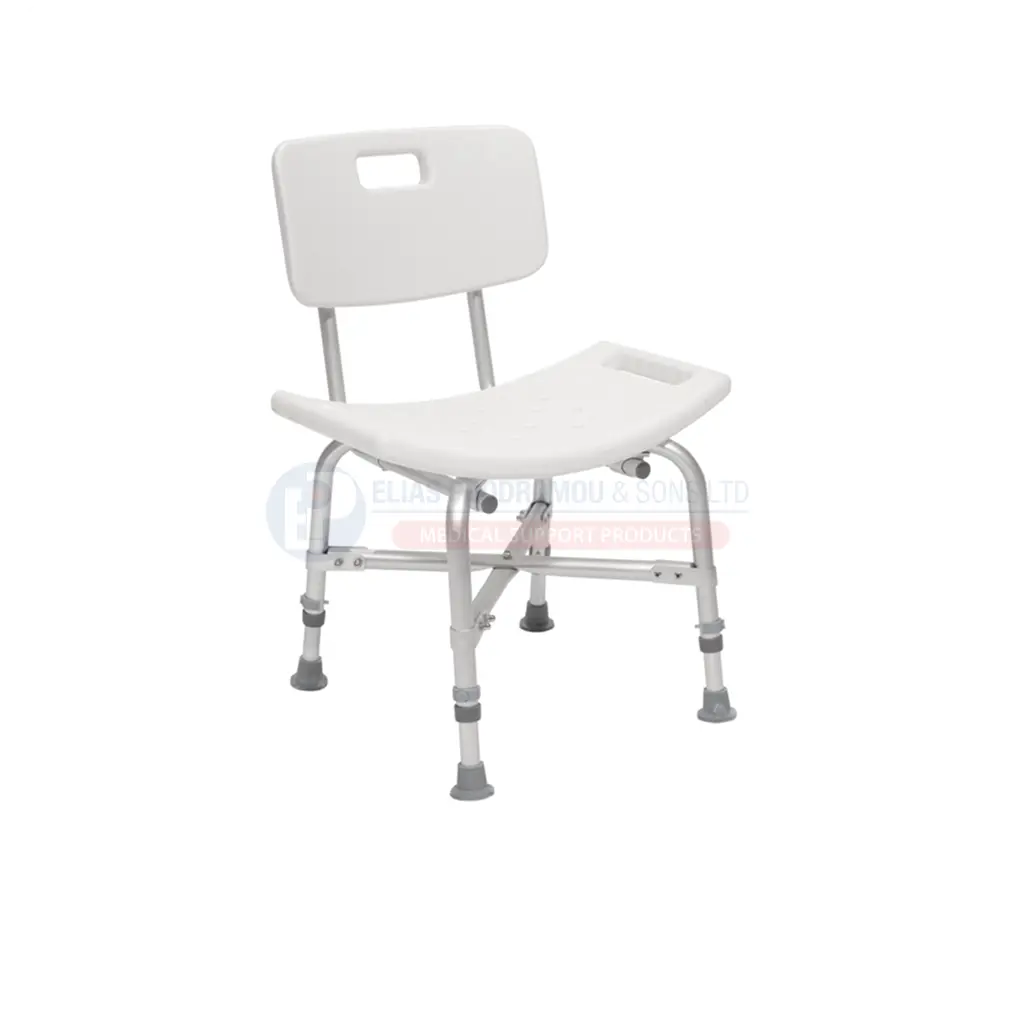
BACKREST · HIGHER CAPACITY
Heavy-duty chair with backrest
Maximum user weight: 225 kg
This height-adjustable chair adds a backrest and has a higher stated capacity than the stool. Check the usable seat dimensions as well as the weight limit.
The same independent-balance requirement applies. The backrest does not remove that restriction.
View the backrest chairProduct features and capacities were checked against the linked product records, the stool instructions and the backrest chair instructions. Always check the instructions and label supplied with the exact product.
4. What does the clinical evidence actually show?
NICE recommends a home-hazard assessment and intervention for people needing comprehensive falls management in the community. It advises considering an occupational therapist to carry this out. The guideline covers people aged 65 and over, and people aged 50–64 with factors that increase their risk of falling; it is not an endorsement of a particular chair. Source: NICE NG249, scope and recommendations 1.3.5–1.3.6.
RESEARCH IN CONTEXT
Assess the whole home and the person
A 2023 Cochrane review found that home fall-hazard interventions reduced the rate of falls by about 38% in older people selected for higher fall risk. That result came from nine studies involving 1,513 participants; the evidence was rated high certainty.
The interventions involved assessing and addressing home hazards. They were not trials showing that one shower-chair model prevents falls. The review found no reduction in fall rate in populations that had not been selected for fall risk. Its evidence search ran to January 2021.
Clemson and colleagues, Cochrane Database of Systematic Reviews, 2023. Read Cochrane’s evidence summary. The figure describes the rate of fall events, not a guaranteed reduction in an individual person’s risk.
For a purchase decision, this supports looking beyond a single feature such as rubber feet. Consider the person’s abilities, access to the shower and the surrounding environment together.
5. Prepare for everyday use
Follow the exact chair’s assembly, adjustment and cleaning instructions. For the stool and heavy-duty backrest chair above, the manuals require correct assembly, a stable position and support on all four legs. Do not use a damaged chair, rock on it or modify its components. Backrest chair manualBackless stool manual
If you help someone wash, discuss their preferences and privacy, have washing items and towels ready, and check that the floor is not slippery. NHS caregiver guidance also recommends comfortable water temperature and seeking advice about safe moving and handling when assistance is needed. Source: NHS, helping someone you care for keep clean.
Common questions
What is the difference between a shower stool and a shower chair?
In the examples above, the stool has no backrest or armrests. The second model adds a backrest. Other designs may also include armrests. Product names are not a specification: check the actual supports, capacity and instructions for the model you are considering.
Can I put a shower chair inside a bath?
Do not assume it will fit or be suitable. Bath sides, the usable base and getting over the bath edge introduce different questions. Ask about equipment intended for your bath and your transfer needs; a shower seat, bath board and transfer bench are different options.
Is the highest weight limit always the best choice?
No. The user must be within the limit, but capacity alone does not establish the right seat dimensions, support, adjustment or access. Check all of those together.
YOUR NEXT STEP
Find a seat that fits your needs and your space
Explore the shower-seating range, then contact our team with your bathroom measurements and product questions. If sitting, balance or transfers are difficult, arrange a clinical assessment before choosing.
Sources and product information
- NICE NG249: Falls—assessment and prevention, published 29 April 2025. Assessment and home-hazard recommendations.
- Clemson et al.: Environmental interventions for preventing falls in older people living in the community, Cochrane, 10 March 2023.
- NHS: How to help someone you care for keep clean, reviewed 11 April 2024.
- Original manufacturer instructions: backless shower stool (PDF), October 2024; heavy-duty chair with backrest (PDF), August 2024.
This guide supports an informed product discussion. It does not replace an individual assessment or the instructions supplied with your equipment.
A shower chair should fit both the person and the bathroom. Before choosing, check the support needed, the seat and height settings, the maximum user weight, and the space required by the complete chair.
This guide explains what to check before buying, compares two options from our shower-seating range, and separates practical product features from the clinical evidence on reducing falls at home.
Consider sitting, standing and any assistance needed.
Compare supports, seat size and the weight limit.
Allow for the complete chair and access around it.
1. Start with the person, before the product
Think through the whole journey: reaching the bathroom, crossing the shower threshold, sitting down, washing and standing up again. A seat inside the shower does not resolve difficulty getting into it.
If the person has difficulty balancing, has fallen, or needs help to sit down or stand up, seek advice from an occupational therapist or another appropriately qualified healthcare professional before choosing equipment. An assessment can consider the person and the bathroom together. NICE’s falls guidance supports individual assessment and targeted home-hazard interventions for older adults and other adults within its risk-based scope. Source: NICE NG249, assessment and home-hazard recommendations.
2. Check both body fit and bathroom fit
Seat dimensions and floor dimensions describe different things. A seat may look narrow while its legs spread beyond it. Compare the complete chair with the usable floor area where it will stand, including the space needed to approach it.
Two measurements. Two different jobs.
Seat dimensionsHelp you assess the space available for the person.
Overall footprintShows the floor space needed by the complete chair.
| Check | What you need to establish |
|---|---|
| The person | Whether the intended user meets the model’s instructions for sitting, standing and balance. Identify any assistance needed. |
| Seat and support | The usable seat width and depth, space between armrests if fitted, and whether the person needs a backrest or different support. |
| Seat height | The available adjustment range and a suitable setting for the person. Ask a clinician if positioning or standing up is difficult. |
| Maximum user weight | The limit for the exact model. Stay within it; a higher capacity does not establish seat fit or transfer suitability. |
| Floor footprint | The outside width and depth at the chosen setting. Check that all feet can stand securely, without resting on an edge or obstruction. |
| Access around it | The door opening, door swing, threshold, shower screen and room for any assistance. |
Measure the usable space inside the tray, rather than relying on the tray’s advertised size. Curved corners, raised edges and a door that opens inward can change the space available.
Before ordering, ask us to confirm the exact model’s dimensions and adjustment range against your measurements. If wheelchair access is also part of the route, our guide to choosing a wheelchair for your home explains the wider access questions.
3. Compare two shower-seating options
These examples show different combinations of support and features in the Prodromou Medical range. Use them to build a shortlist after considering the person’s needs; the specifications are not a clinical recommendation.
BACKLESS SEATING
Adjustable shower stool
Maximum user weight: 100 kg
A height-adjustable aluminium stool without a backrest or armrests. Consider the absence of those supports when discussing what the person needs.
Its instructions require independent balance for sitting and standing, as well as the ability to remain seated.
View the shower stool
BACKREST · HIGHER CAPACITY
Heavy-duty chair with backrest
Maximum user weight: 225 kg
This height-adjustable chair adds a backrest and has a higher stated capacity than the stool. Check the usable seat dimensions as well as the weight limit.
The same independent-balance requirement applies. The backrest does not remove that restriction.
View the backrest chairProduct features and capacities were checked against the linked product records, the stool instructions and the backrest chair instructions. Always check the instructions and label supplied with the exact product.
4. What does the clinical evidence actually show?
NICE recommends a home-hazard assessment and intervention for people needing comprehensive falls management in the community. It advises considering an occupational therapist to carry this out. The guideline covers people aged 65 and over, and people aged 50–64 with factors that increase their risk of falling; it is not an endorsement of a particular chair. Source: NICE NG249, scope and recommendations 1.3.5–1.3.6.
RESEARCH IN CONTEXT
Assess the whole home and the person
A 2023 Cochrane review found that home fall-hazard interventions reduced the rate of falls by about 38% in older people selected for higher fall risk. That result came from nine studies involving 1,513 participants; the evidence was rated high certainty.
The interventions involved assessing and addressing home hazards. They were not trials showing that one shower-chair model prevents falls. The review found no reduction in fall rate in populations that had not been selected for fall risk. Its evidence search ran to January 2021.
Clemson and colleagues, Cochrane Database of Systematic Reviews, 2023. Read Cochrane’s evidence summary. The figure describes the rate of fall events, not a guaranteed reduction in an individual person’s risk.
For a purchase decision, this supports looking beyond a single feature such as rubber feet. Consider the person’s abilities, access to the shower and the surrounding environment together.
5. Prepare for everyday use
Follow the exact chair’s assembly, adjustment and cleaning instructions. For the stool and heavy-duty backrest chair above, the manuals require correct assembly, a stable position and support on all four legs. Do not use a damaged chair, rock on it or modify its components. Backrest chair manualBackless stool manual
If you help someone wash, discuss their preferences and privacy, have washing items and towels ready, and check that the floor is not slippery. NHS caregiver guidance also recommends comfortable water temperature and seeking advice about safe moving and handling when assistance is needed. Source: NHS, helping someone you care for keep clean.
Common questions
What is the difference between a shower stool and a shower chair?
In the examples above, the stool has no backrest or armrests. The second model adds a backrest. Other designs may also include armrests. Product names are not a specification: check the actual supports, capacity and instructions for the model you are considering.
Can I put a shower chair inside a bath?
Do not assume it will fit or be suitable. Bath sides, the usable base and getting over the bath edge introduce different questions. Ask about equipment intended for your bath and your transfer needs; a shower seat, bath board and transfer bench are different options.
Is the highest weight limit always the best choice?
No. The user must be within the limit, but capacity alone does not establish the right seat dimensions, support, adjustment or access. Check all of those together.
YOUR NEXT STEP
Find a seat that fits your needs and your space
Explore the shower-seating range, then contact our team with your bathroom measurements and product questions. If sitting, balance or transfers are difficult, arrange a clinical assessment before choosing.
Sources and product information
- NICE NG249: Falls—assessment and prevention, published 29 April 2025. Assessment and home-hazard recommendations.
- Clemson et al.: Environmental interventions for preventing falls in older people living in the community, Cochrane, 10 March 2023.
- NHS: How to help someone you care for keep clean, reviewed 11 April 2024.
- Original manufacturer instructions: backless shower stool (PDF), October 2024; heavy-duty chair with backrest (PDF), August 2024.
This guide supports an informed product discussion. It does not replace an individual assessment or the instructions supplied with your equipment.