

A wheelchair needs to suit the person using it and the places they move through every day. Before choosing one for your home in Cyprus, look at personal fit, the route through your rooms, and how you will store or transport it.
Start with three checks: who will move the chair, where it needs to go, and what support the person needs. This guide helps you prepare those details before comparing models; individual seating and mobility needs should be assessed by a professional trained in wheelchair provision.
1. Start with the person and their daily routine
Will the person propel the wheelchair themselves, rely on someone else to push it, or need powered mobility? Will they use it occasionally for appointments, or for much of the day? Write down what they want to do, including the journeys that are currently difficult.
The NHS recommends considering who will push the chair, frequency of use, indoor and outdoor use, comfort, and maintenance costs. Ask about trying suitable options before making a decision. NHS: choosing a wheelchair.
An individual assessment should guide the choice of seating and support. The World Health Organization recommends a process that includes assessment and selection, fitting, training, and follow-up. A shopping checklist helps you prepare for that process. WHO: wheelchair provision guidelines.
2. Separate seat size from the space the chair needs
Seat width describes the seating area. Overall width describes the chair's full width. A product labelled with a 46 cm seat does not necessarily fit through a 46 cm opening: its frame, wheels and other components occupy additional space.
For example, our folding wheelchair with a 46 cm seat illustrates why you need to ask for both measurements. The seat size alone cannot establish whether that model will work in your home.
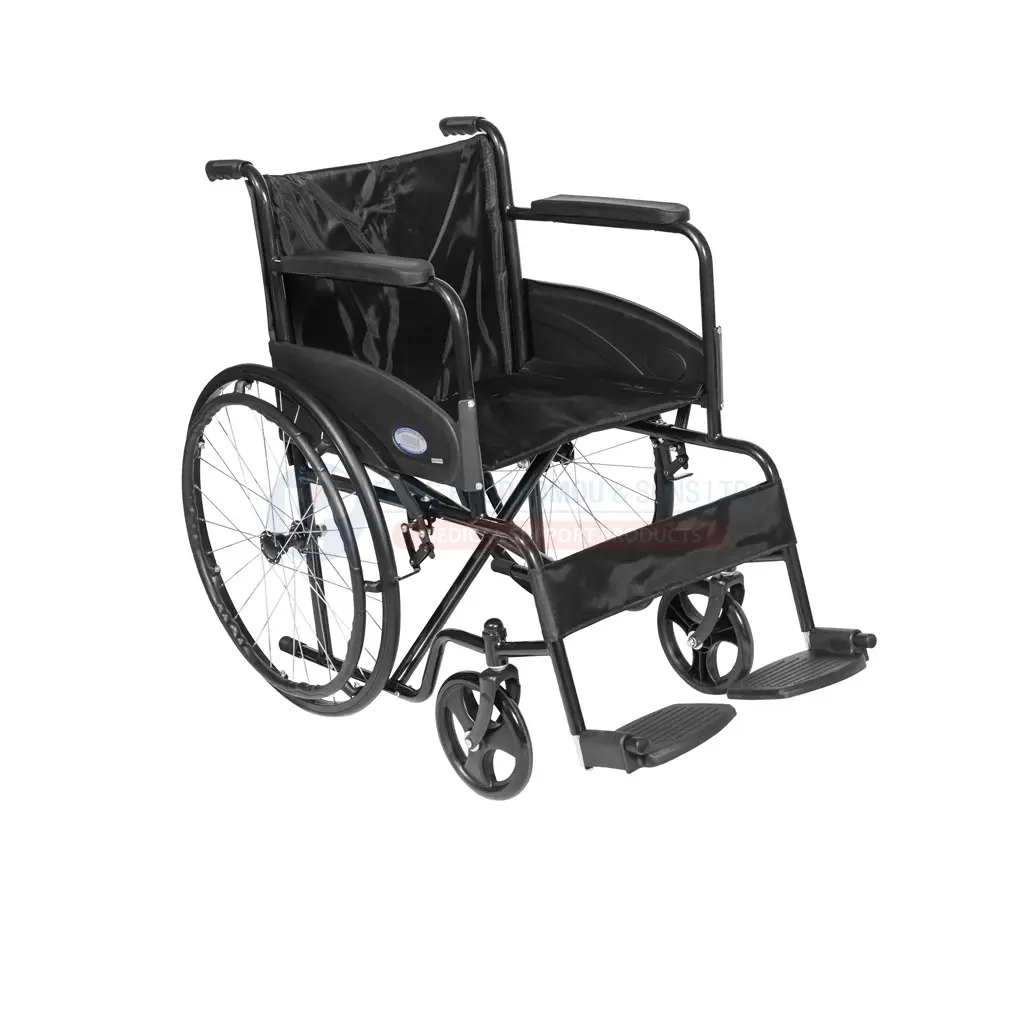
KNOW THE DIFFERENCE
Seat size is not
doorway size.
46 cm seatdoes not mean46 cm doorway
- Seat width
- The seating area for the person.
- Overall width
- The full chair, including its frame and wheels.
Confirm the exact chair dimensions, then discuss the route it needs to use.
Ask for the exact overall width and length of the configuration you are considering, including any accessories that change its footprint. For a close fit, ask how the actual chair can be checked in the intended space before ordering.
Avoid selecting an unsuitable seat simply to get through a narrow doorway. North Tees and Hartlepool NHS Foundation Trust explains that the person's fit remains a priority when considering access at home; changes to the environment may need to be considered. Wheelchair dimensions and home access.
3. Check the whole route through your home
Begin at the entrance and follow the route to the bedroom, bathroom and usual sitting area. Record the narrow points and awkward turns, including the approach to each doorway. Passing through a straight opening does not, by itself, establish that you can turn into the next room.
Use the checklist below to gather information for the supplier or assessor. It is a planning aid, not a building-standard assessment or a guarantee of access.
| Place to check | What to record |
|---|---|
| Doorways | The clear opening with the door in its usual open position; note handles, furniture or other obstructions. |
| Hallways and corners | Narrow sections, the approach to each door, and space available for turning. |
| Bedroom and bathroom | The route to the places the person needs to reach, and space for any assistance they require. |
| Entrance and thresholds | Steps, raised edges, slopes and changes in surface that need discussion. |
| Lift, if used | Door opening and internal width and depth, plus any tight approach or exit. |
| Storage area | Space for the chair and its removable parts; ask about the model's storage requirements. |
Do not rely on an assumed “standard door size.” Your own measurements, the actual chair and the way it will be used are what matter. The NHS wheelchair service also highlights overall length when considering turning space. North Tees wheelchair FAQs.
4. Check folding, lifting and car-boot space separately
“Folding” describes a feature; it does not establish that a particular wheelchair will fit in your car or be manageable for the person loading it. Compare the folded dimensions with both the boot opening and the usable space inside.
Ask these questions for the exact model:
- What are its folded width, length and height?
- What is its total weight, and what would actually need to be lifted?
- Which parts are designed to be removed, and how are they refitted?
- Can the person who will load it see a demonstration and check the arrangement?
Follow the manufacturer's instructions for folding, lifting and securing the chair. Leeds Teaching Hospitals advises securing wheelchairs during vehicle transport so they cannot move around. Being able to store a folded chair in a boot does not establish suitability for travelling while seated in it. Leeds: wheelchair transport guidance.
5. Look beyond the headline specification
Once you have suitable options, compare what everyday ownership involves. Ask for the user manual, the applicable maximum user weight, adjustment options, and information about maintenance, spare parts and repairs.
A specification such as “detachable footrests” tells you about a component, but not whether the complete chair meets a particular person's needs. Discuss any seating, support or transfer requirements with the appropriately trained professional involved in the selection. Ask for instruction in using the chosen chair and how to arrange a review if needs change. WHO wheelchair provision guidance.
Your shortlist: what to bring to the conversation
Prepare these five items before you enquire:
- Daily use: who will move the chair, where it will be used and how often.
- Home notes: doorway measurements, tight turns, thresholds and lift details if relevant.
- Transport needs: car-boot opening and space, who will load the chair, and storage constraints.
- Existing recommendations: the model, configuration or features advised by the professional involved, if you already have an assessment.
- Questions for the supplier: exact dimensions, weight, removable parts, manual, availability and after-sales arrangements.
Start with measurements and practical requirements. There is no need to send personal medical records just to ask a product-dimension question.
Frequently asked questions
Is a folding wheelchair automatically lightweight?
No. Folding ability and product weight are separate specifications. Check the exact model's listed weight and the weight of the parts that must be handled, instead of relying on the word “folding.”
What if a suitable wheelchair does not fit through my door?
Raise the problem with the professional assessing the chair and your supplier before ordering. Ask whether a different suitable configuration or an assessment of the environment is needed; do not resolve the problem by choosing an unsuitable seat size. North Tees guidance.
Can I choose the right wheelchair from a product photo?
A photograph helps you see the design, but it cannot establish personal fit, exact dimensions or suitability for your daily routine. Use the specification and manual alongside an individual assessment and, where possible, a trial of suitable options. WHO guidance and NHS guidance.
YOUR NEXT STEP
Compare wheelchairs with your home in mind
Have your home measurements and daily needs ready. Explore the range, then ask us to confirm the dimensions and features of the model you are considering.
Sources
- World Health Organization — Wheelchair provision guidelines, 5 June 2023.
- NHS — Walking aids, wheelchairs and mobility scooters, reviewed 8 April 2026.
- North Tees and Hartlepool NHS Foundation Trust — Wheelchair FAQs, accessed 30 September 2026.
- Leeds Teaching Hospitals NHS Trust — You and Your New Wheelchair, reviewed 4 June 2025.
- Prodromou Medical — Folding wheelchair, 46 cm seat, product identity and seat width checked 30 September 2026.
The UK sources above support general wheelchair considerations. Their UK service, funding and eligibility information is not guidance on services or entitlements in Cyprus.
A wheelchair needs to suit the person using it and the places they move through every day. Before choosing one for your home in Cyprus, look at personal fit, the route through your rooms, and how you will store or transport it.
Start with three checks: who will move the chair, where it needs to go, and what support the person needs. This guide helps you prepare those details before comparing models; individual seating and mobility needs should be assessed by a professional trained in wheelchair provision.
1. Start with the person and their daily routine
Will the person propel the wheelchair themselves, rely on someone else to push it, or need powered mobility? Will they use it occasionally for appointments, or for much of the day? Write down what they want to do, including the journeys that are currently difficult.
The NHS recommends considering who will push the chair, frequency of use, indoor and outdoor use, comfort, and maintenance costs. Ask about trying suitable options before making a decision. NHS: choosing a wheelchair.
An individual assessment should guide the choice of seating and support. The World Health Organization recommends a process that includes assessment and selection, fitting, training, and follow-up. A shopping checklist helps you prepare for that process. WHO: wheelchair provision guidelines.
2. Separate seat size from the space the chair needs
Seat width describes the seating area. Overall width describes the chair's full width. A product labelled with a 46 cm seat does not necessarily fit through a 46 cm opening: its frame, wheels and other components occupy additional space.
For example, our folding wheelchair with a 46 cm seat illustrates why you need to ask for both measurements. The seat size alone cannot establish whether that model will work in your home.
KNOW THE DIFFERENCE
Seat size is not
doorway size.
46 cm seatdoes not mean46 cm doorway
- Seat width
- The seating area for the person.
- Overall width
- The full chair, including its frame and wheels.
Confirm the exact chair dimensions, then discuss the route it needs to use.
Ask for the exact overall width and length of the configuration you are considering, including any accessories that change its footprint. For a close fit, ask how the actual chair can be checked in the intended space before ordering.
Avoid selecting an unsuitable seat simply to get through a narrow doorway. North Tees and Hartlepool NHS Foundation Trust explains that the person's fit remains a priority when considering access at home; changes to the environment may need to be considered. Wheelchair dimensions and home access.
3. Check the whole route through your home
Begin at the entrance and follow the route to the bedroom, bathroom and usual sitting area. Record the narrow points and awkward turns, including the approach to each doorway. Passing through a straight opening does not, by itself, establish that you can turn into the next room.
Use the checklist below to gather information for the supplier or assessor. It is a planning aid, not a building-standard assessment or a guarantee of access.
| Place to check | What to record |
|---|---|
| Doorways | The clear opening with the door in its usual open position; note handles, furniture or other obstructions. |
| Hallways and corners | Narrow sections, the approach to each door, and space available for turning. |
| Bedroom and bathroom | The route to the places the person needs to reach, and space for any assistance they require. |
| Entrance and thresholds | Steps, raised edges, slopes and changes in surface that need discussion. |
| Lift, if used | Door opening and internal width and depth, plus any tight approach or exit. |
| Storage area | Space for the chair and its removable parts; ask about the model's storage requirements. |
Do not rely on an assumed “standard door size.” Your own measurements, the actual chair and the way it will be used are what matter. The NHS wheelchair service also highlights overall length when considering turning space. North Tees wheelchair FAQs.
4. Check folding, lifting and car-boot space separately
“Folding” describes a feature; it does not establish that a particular wheelchair will fit in your car or be manageable for the person loading it. Compare the folded dimensions with both the boot opening and the usable space inside.
Ask these questions for the exact model:
- What are its folded width, length and height?
- What is its total weight, and what would actually need to be lifted?
- Which parts are designed to be removed, and how are they refitted?
- Can the person who will load it see a demonstration and check the arrangement?
Follow the manufacturer's instructions for folding, lifting and securing the chair. Leeds Teaching Hospitals advises securing wheelchairs during vehicle transport so they cannot move around. Being able to store a folded chair in a boot does not establish suitability for travelling while seated in it. Leeds: wheelchair transport guidance.
5. Look beyond the headline specification
Once you have suitable options, compare what everyday ownership involves. Ask for the user manual, the applicable maximum user weight, adjustment options, and information about maintenance, spare parts and repairs.
A specification such as “detachable footrests” tells you about a component, but not whether the complete chair meets a particular person's needs. Discuss any seating, support or transfer requirements with the appropriately trained professional involved in the selection. Ask for instruction in using the chosen chair and how to arrange a review if needs change. WHO wheelchair provision guidance.
Your shortlist: what to bring to the conversation
Prepare these five items before you enquire:
- Daily use: who will move the chair, where it will be used and how often.
- Home notes: doorway measurements, tight turns, thresholds and lift details if relevant.
- Transport needs: car-boot opening and space, who will load the chair, and storage constraints.
- Existing recommendations: the model, configuration or features advised by the professional involved, if you already have an assessment.
- Questions for the supplier: exact dimensions, weight, removable parts, manual, availability and after-sales arrangements.
Start with measurements and practical requirements. There is no need to send personal medical records just to ask a product-dimension question.
Frequently asked questions
Is a folding wheelchair automatically lightweight?
No. Folding ability and product weight are separate specifications. Check the exact model's listed weight and the weight of the parts that must be handled, instead of relying on the word “folding.”
What if a suitable wheelchair does not fit through my door?
Raise the problem with the professional assessing the chair and your supplier before ordering. Ask whether a different suitable configuration or an assessment of the environment is needed; do not resolve the problem by choosing an unsuitable seat size. North Tees guidance.
Can I choose the right wheelchair from a product photo?
A photograph helps you see the design, but it cannot establish personal fit, exact dimensions or suitability for your daily routine. Use the specification and manual alongside an individual assessment and, where possible, a trial of suitable options. WHO guidance and NHS guidance.
YOUR NEXT STEP
Compare wheelchairs with your home in mind
Have your home measurements and daily needs ready. Explore the range, then ask us to confirm the dimensions and features of the model you are considering.
Sources
- World Health Organization — Wheelchair provision guidelines, 5 June 2023.
- NHS — Walking aids, wheelchairs and mobility scooters, reviewed 8 April 2026.
- North Tees and Hartlepool NHS Foundation Trust — Wheelchair FAQs, accessed 30 September 2026.
- Leeds Teaching Hospitals NHS Trust — You and Your New Wheelchair, reviewed 4 June 2025.
- Prodromou Medical — Folding wheelchair, 46 cm seat, product identity and seat width checked 30 September 2026.
The UK sources above support general wheelchair considerations. Their UK service, funding and eligibility information is not guidance on services or entitlements in Cyprus.