

 A guide for home care
Daily Living & Bathroom Safety
How to choose
a commode chair
The right fit.
The right support.
A more practical everyday routine.
Start with the task.
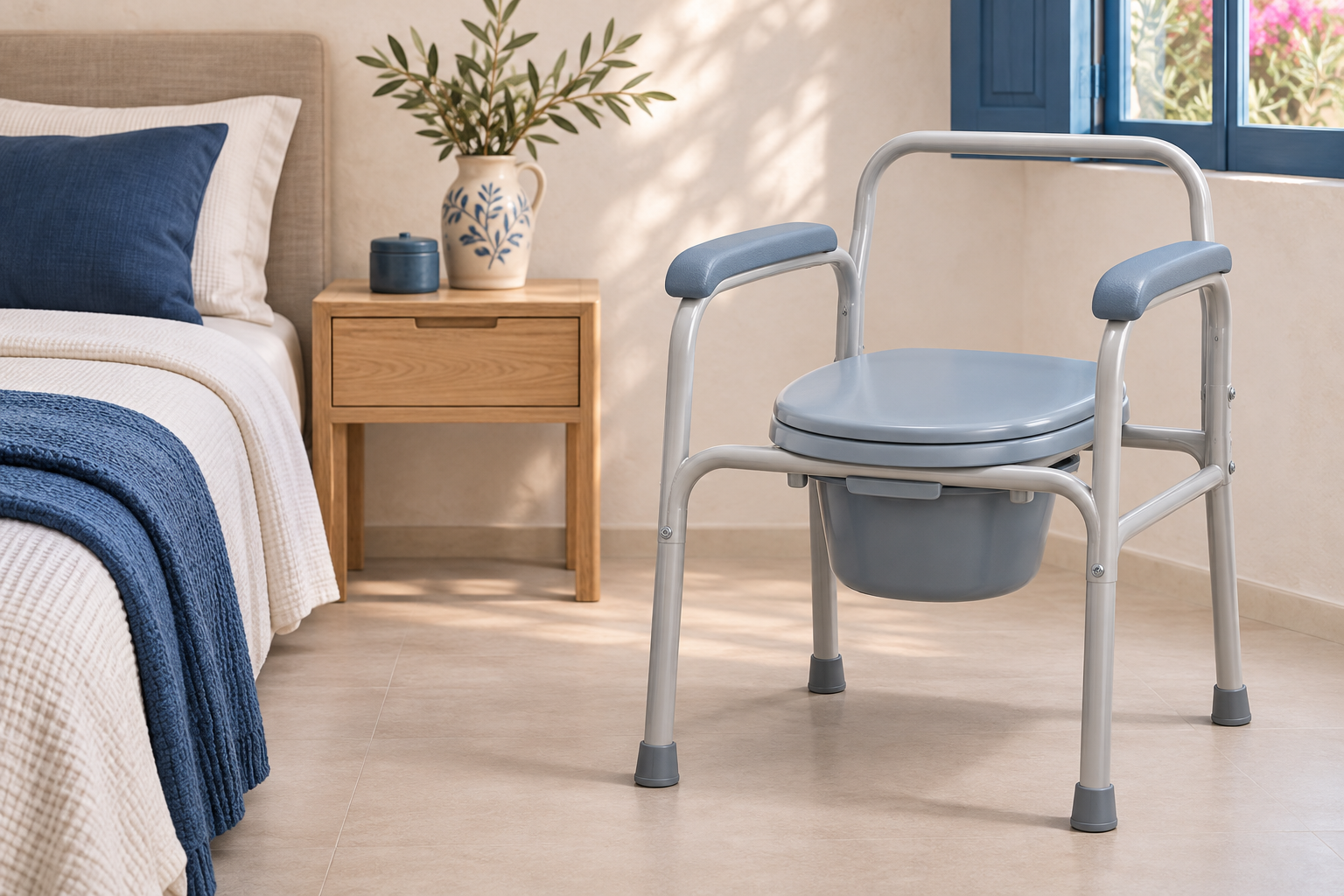
A commode provides a toilet option when reaching the bathroom is difficult. Choose around the person's needs, the available support and the room — then compare the features. NHS guidance ↗
Two useful starting points.
One stays in place during use.
One is designed for indoor movement as well as toileting.
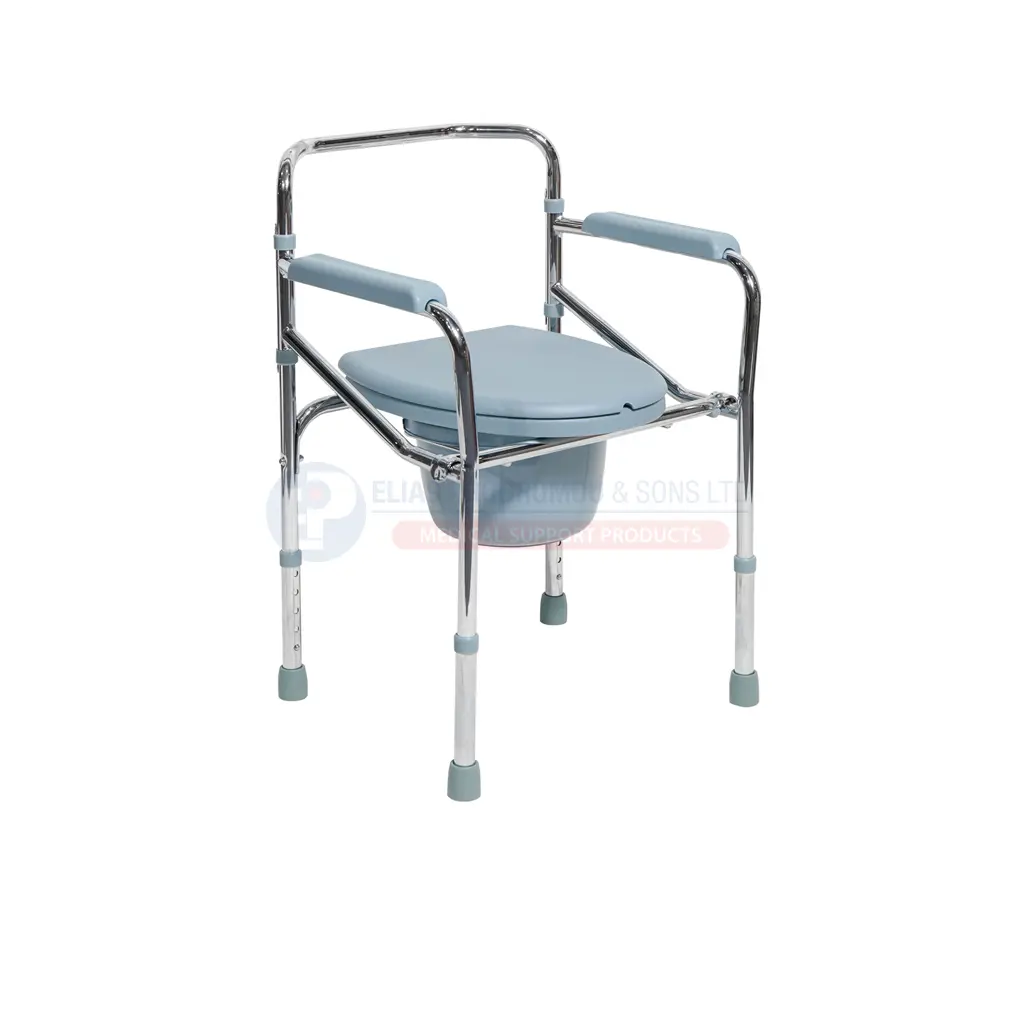
Folding commode chair
Adjustable steel frame with a removable pan. Consider this option when the chair will stay in one position during use and storage matters.
- Maximum user weight
- 100 kg
- Seat-height range
- 46–56 cm
Check: Does the height range and arm arrangement suit the person's assessed needs?
View folding chair Model instructions · PDF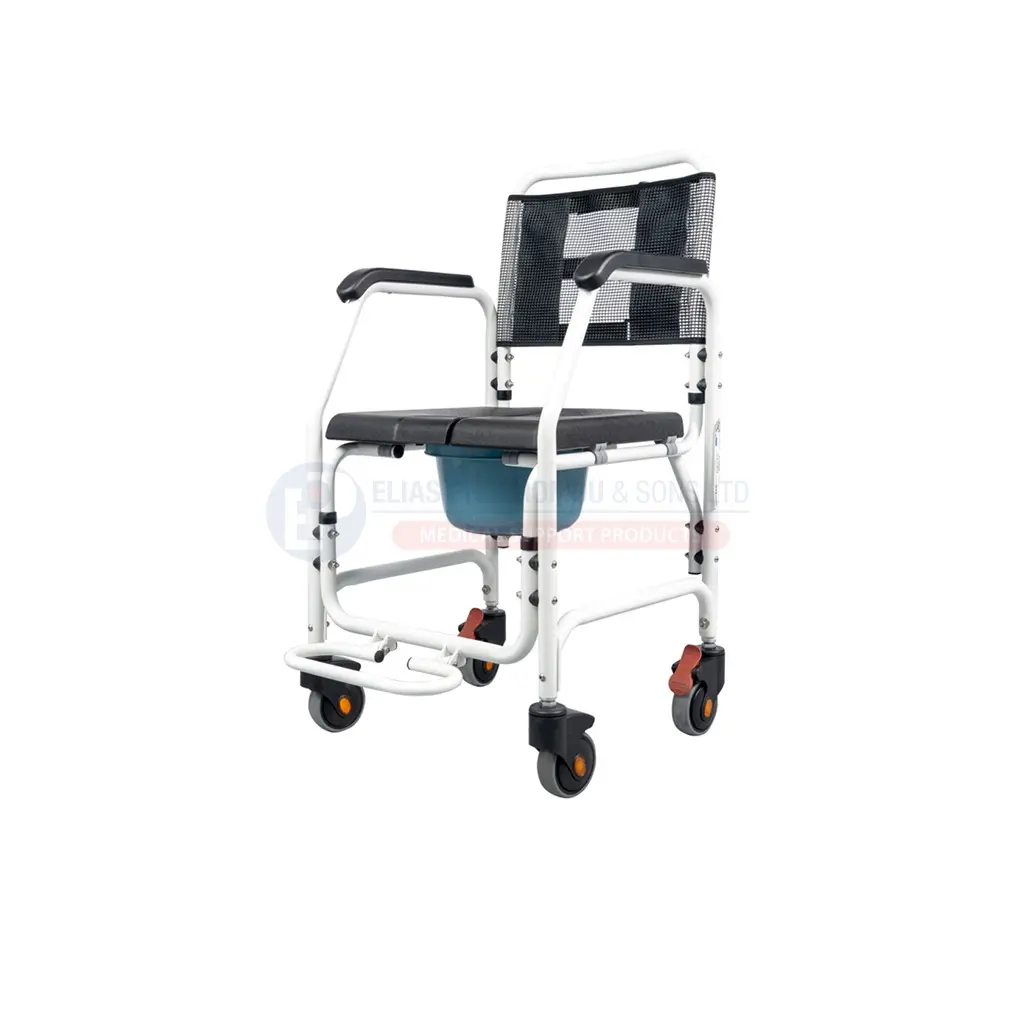
ASPER commode chair
Aluminium frame with fixed arms, folding foot supports and rear-castor brakes. Its instructions cover toileting and indoor movement assistance.
- Maximum user weight
- 136 kg
- Front & rear castors
- 4-inch
Check: Do the fixed arms, supports and size suit the planned transfer and indoor route?
View ASPER chair Model instructions · PDFA higher weight limit is one specification, not a reason to choose a chair on its own. Both examples need to suit the person and the intended use.
Before you choose
Three things
to get right.
The person
Check the weight limit, seat height, width and support. If sitting, standing or transferring is difficult, ask an occupational therapist or another appropriately qualified professional to assess the setup. NHS assessment advice.
The space
Measure the whole chair, including projecting parts. Check the doorway and leave the working space for approach, assistance and pan access to be assessed. Seat width is not overall width.
The care routine
Agree who will empty and clean the pan. The two manuals specify cleaning after use, avoiding acidic or caustic solutions and drying the equipment. Follow the supplied instructions.
The evidence, clearly
Assessment comes first.
NICE's 2025 falls guideline recommends a home-hazard assessment and intervention for people needing comprehensive falls management in the community, and says to consider an occupational therapist for this work. Read recommendations 1.3.5–1.3.6.
This is general care guidance. It does not prove that either chair prevents falls; NICE identifies insufficient evidence on assistive technologies such as self-care devices for that outcome. Evidence explanation ↗
A few final questions.
Can a commode fit over my existing toilet?
Some models allow this with the pan removed. Check the exact instructions, height, opening and overall fit against your toilet before purchase.
Does a wheeled commode replace a wheelchair?
Do not assume it does. Check the model's intended use and the person's assessed needs. The ASPER instructions describe indoor movement assistance; that is not a statement of suitability for every journey or transfer.
What if the chair feels unstable or becomes damaged?
Stop using it until the problem has been resolved. Follow the model's inspection and maintenance instructions, and ask for help with the equipment or setup.
Sources & useful reading
- NHS household equipment guidance — reviewed September 2024.
- Kingston and Richmond NHS: static commode — December 2024; equipment-specific advice.
- NICE NG249 and rationale — 2025. Applies to adults aged 65+ and adults 50–64 at higher risk.
- Folding-chair instructions (PDF) — August 2024, pages 5–6.
- ASPER instructions (PDF) — pages 6–8; version date not stated.
Planning more rooms? Read our home-care equipment guide.
Prepared by Prodromou Medical. Product information supports comparison; individual suitability and transfer advice belong with your healthcare professional.