


Mobility & accessibility
A practical selection guide
Walking frame
or rollator?
See the difference. Then check the fit.
The right starting point is the support you need, the controls you can use and the places you want to go.
By Prodromou Medical
Explore the two designs
Front-wheeled frame
Two front wheels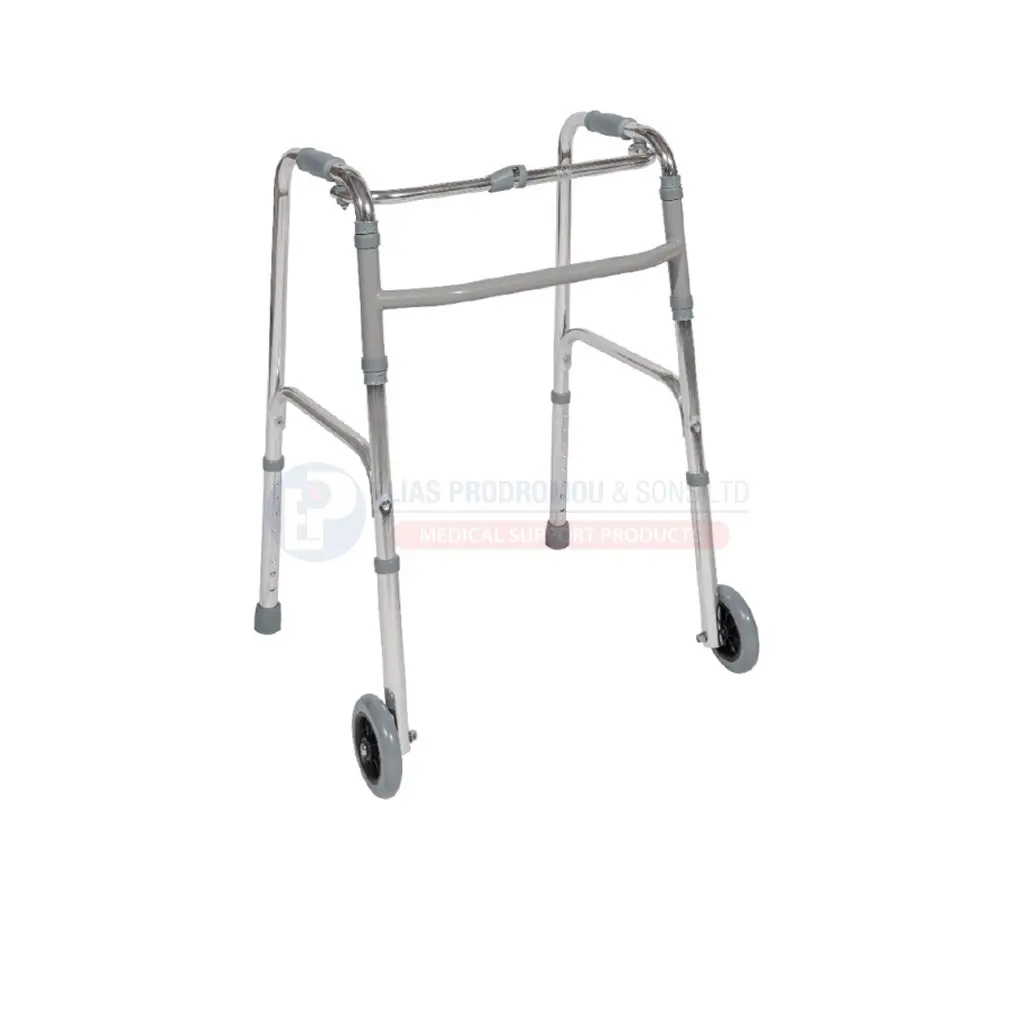
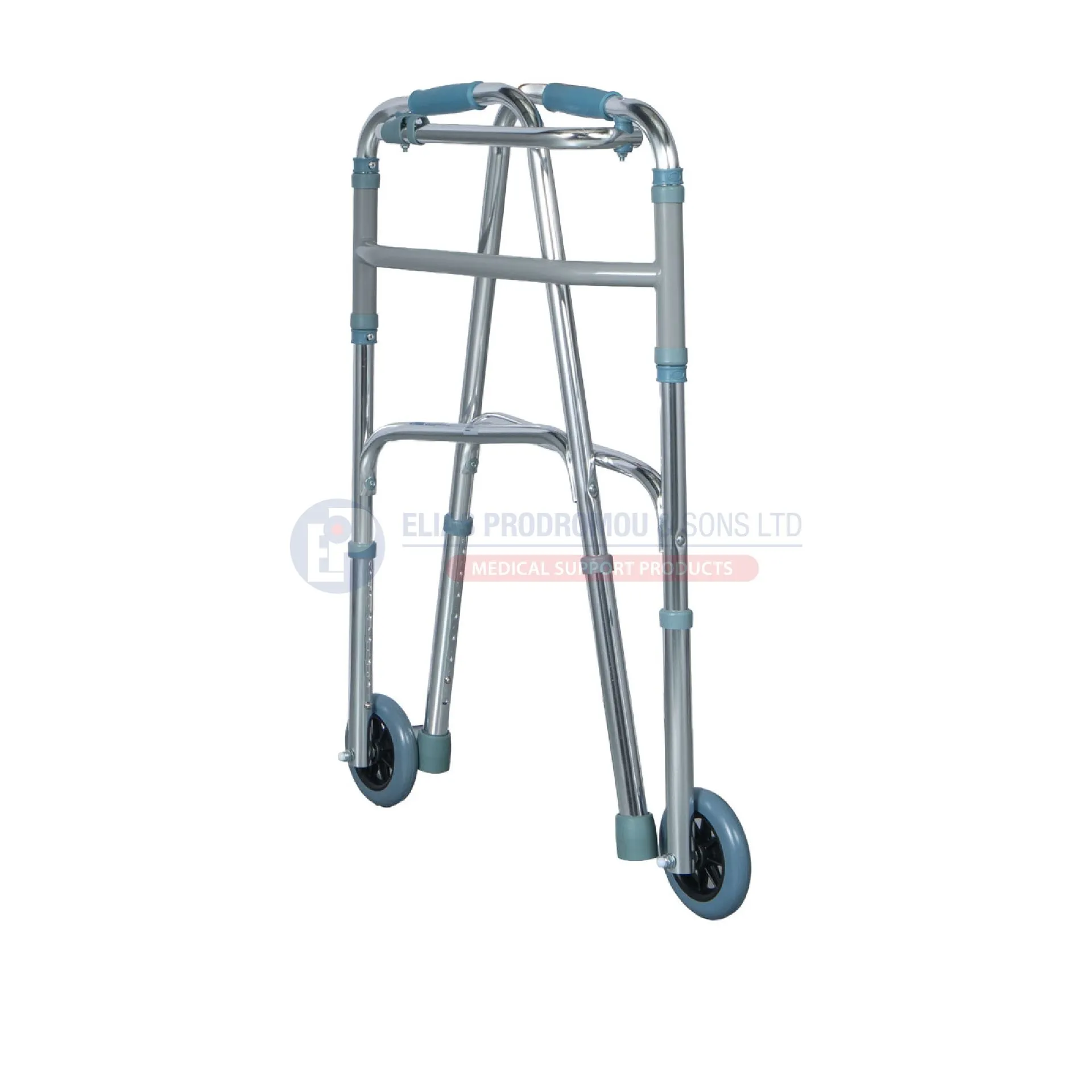
This model has no seat or handbrakes. Its handling differs from a four-wheel rollator.
Overall width: 60 cm
Seat: none
Folds for storage
Check the space it needs and who will lift it. Fully open and lock the frame before use.
Action rollator
Four wheels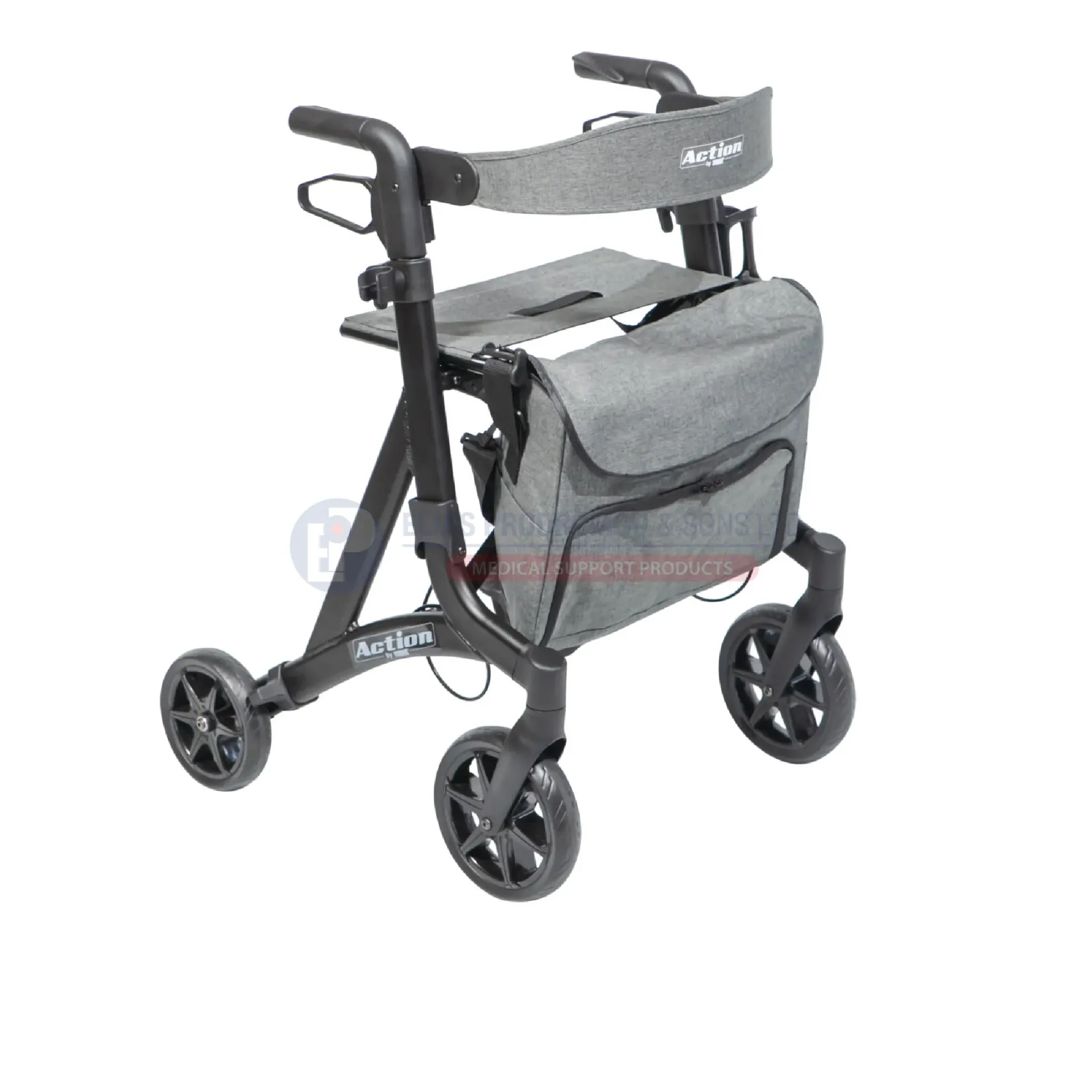
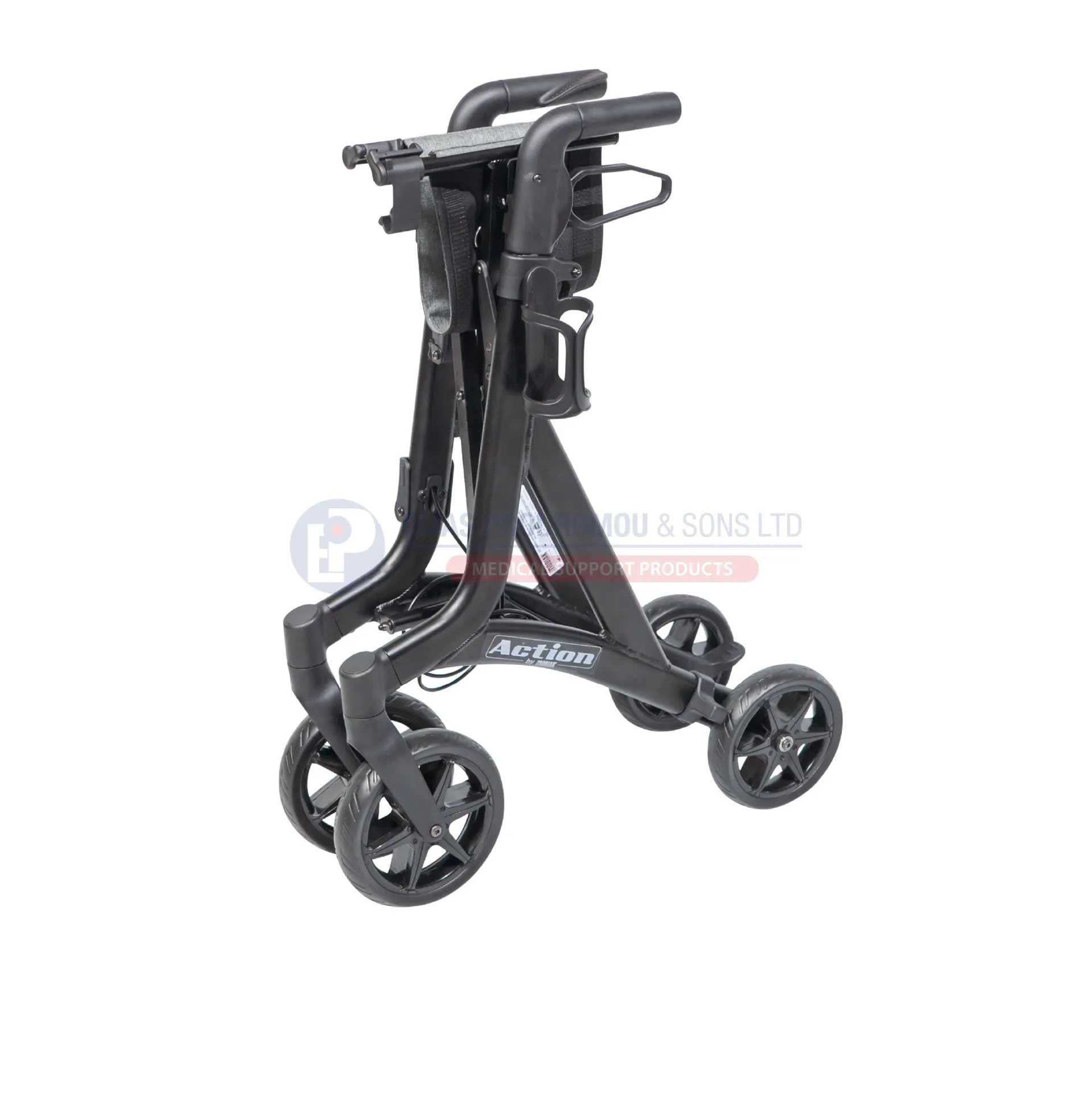
The user needs to steer and operate the brakes reliably. A seat does not make this a wheelchair.
Overall width: 60 cm
Seat height: 60 cm
Folds between journeys
Try the folding and lifting actions with appropriate support. The bag is included.
Exact-model examples from our range. Photographs are not to scale. Product details: frame instructions · Action instructions.
Support comes
before features.
Neither design is best for everyone. Choose around your walking ability, fit and environment—not just a seat or the number of wheels. A physiotherapist can help assess suitability. NHS selection guidance.
A pickup frame is another design: it has four rubber-tipped feet and is lifted forward. Names such as “walker” vary, so check the actual configuration.
Same width.
Different fit.
Both examples are 60 cm wide. Their handle ranges and seats differ. Equal width does not mean they turn or handle identically.
Handle heightFloor to the grip
Seat heightFloor to the sitting surface
Measurement locations only. Illustrations are not to scale.
| What to compare | Front-wheeled frame | Action rollator |
|---|---|---|
| Handle height | 80–95 cm | 83–102 cm |
| Overall width | 60 cm | 60 cm |
| Seat height | No seat | 60 cm |
Handle height is not your height. A usual fitting reference is around wrist-crease level with your arms relaxed. Wear your everyday shoes and have the fit checked. NHS fitting advice.
Adjustable handles do not mean an adjustable seat. Check the Action’s 60 cm-high seat personally, and confirm the exact model’s load limits, including what you carry in its bag.
Dimensions: front-wheeled frame manual · Action manual. Measurements help comparison; they do not establish individual suitability.
Check the route.
Try the real actions.
Overall product width is only a starting point. You also need room to move and turn beside furniture.
Your route
Check doorways, turns, thresholds and outdoor surfaces. Four wheels alone do not make an aid suitable for every slope or path.
Your controls
Can you reach both brake levers, slow, stop and engage the parking brakes? Ask for a demonstration. Controls differ between models. Hospital rollator guidance.
Your transport
Check storage space, folding and who will lift the aid into the car. Try those tasks with appropriate support and follow the exact instructions.
Tell us where
you want to go.
Compare the current range, or ask us about product dimensions and features. Bring your doorway measurements, transport needs and any advice from your physiotherapist.
Evidence and product instructions
- NHS — Walking aids, wheelchairs and mobility scooters
- Guy's and St Thomas' NHS Foundation Trust — Falls - Staying active
- Worcestershire Acute Hospitals NHS Trust — Safety Information for patients using a walking aid
- Queensland Health, Chief Allied Health Officer — S-MT02: Prescribe, train and review of walking aids
- Memorial Sloan Kettering Cancer Center — How To Adjust and Use Parts of a Rollator
- Front-wheeled frame — exact-model instructions
- Action rollator — exact-model instructions
Prepared by Prodromou Medical. General selection guidance and product information. Individual suitability should be assessed by the healthcare professional responsible for your care.